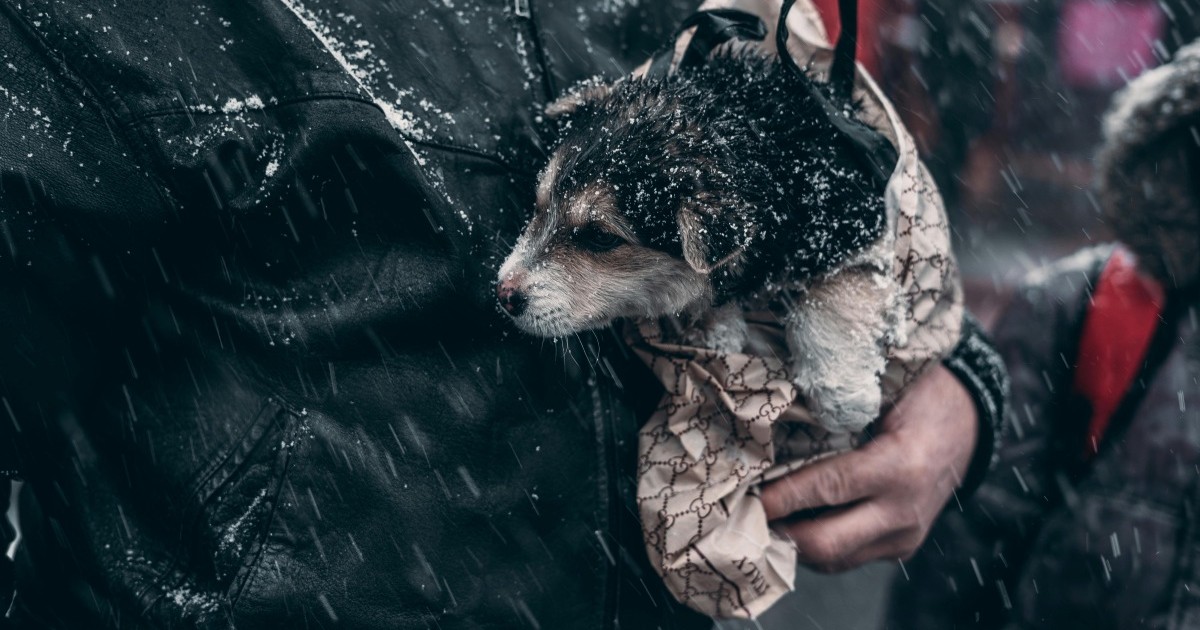
Cold weather brings snow days, cozy blankets, and hot cocoa – but it also brings serious risks for pets. Whether your pet spends most of their time indoors or enjoys winter walks, taking a few extra precautions can make all the difference during the colder months.
Here’s what to know about keeping pets safe in winter, what to do if a pet goes missing in cold weather, and how you can help loose pets you may encounter.
Cold Weather Safety Tips for Pets
Just like people, pets can suffer from cold-related injuries such as hypothermia and frostbite. Even pets with thick coats need protection when temperatures drop.
Limit time outdoors
- Keep outdoor trips short, especially during extreme cold, wind, or wet conditions.
- Smaller pets, seniors, and short-haired breeds are especially vulnerable.
Watch out for ice and snow hazards
- Avoid walking pets near ponds, lakes, or rivers where ice may be thin.
- Snow and ice can hide sharp objects or irritate paws.
Protect paws
- Wipe paws after walks to remove ice melt, salt, and chemicals.
- Use pet-safe ice melt at home or consider protective booties.
Provide proper identification
- Make sure pets wear a collar with up-to-date ID tags.
- Ensure your microchip registration has your current contact information.
Check your yard
- Regularly check your fences and gates for damage from wind and snow.
- Snow drifts against your fence line can provide an escape route for your pet.
Lost Pets in Cold Weather: Where They May Hide
Pets that become lost during cold weather often behave differently than they would in warmer months. Cold, fear, and exhaustion can cause them to seek shelter quickly and remain hidden.
Common places lost pets may hide include:
- Under porches, decks, or sheds
- Inside open garages or barns
- Beneath vehicles
- In dense vegetation, shrubs, piles of brush or debris, or snowbanks
- Near heat sources such as HVAC units, warm exhaust, or heat from landscape lighting
If your pet is missing, search nearby sheltered areas first and ask neighbors to check garages, sheds, and crawl spaces.
Loose Pets in Cold Weather: How You Can Help
Seeing a loose pet during freezing temperatures can be concerning. If it’s safe to do so, here are a few ways you can help.
Provide temporary shelter
- Offer a dry, wind-protected space such as a garage, porch, or insulated box.
- Line the area with straw to help retain warmth.
Offer fresh water
- Water freezes quickly in cold weather – check often and replace as needed.
Report the pet
- File a found pet report and check for matching lost pet listings.
- Share the report with neighbors, shelters, veterinarians, and on social media.
- If the animal appears injured, contact your shelter or animal control for help.
If Your Pet Goes Missing: Act Quickly
Cold weather can put lost pets at greater risk, making quick action especially important.
If your pet is lost:
- Report them missing on PetFBI.org.
- Include clear photos, accurate details, and the last known location.
- Once your report is entered, you can download and print a flyer to share with neighbors, shelters, veterinarians, and on social media.
If you find a pet:
- Submit a found pet report on PetFBI.org.
- Search existing lost pet listings for possible matches.
For more tips and advice:
Pet FBI helps connect lost pets with the people searching for them – especially when time and weather are critical.